
Another Locked Door
How billionaires turned even art into an enclosure, and why it still matters to live near beauty.

The first time I walked into a real Park Avenue apartment, the kind with a doorman who looks at you like you are a clerical error, the air felt refrigerated in a way that had nothing to do with temperature. The couple who lived there were clients, sort of. He was finance, she was “on the board” of three things, all of them vague and important. They had the haircut, the watch, the smile that never reached the eyes. The usual New York oligarch starter pack. What I remember is the wall. A Richter, a Twombly, something blue and expensive humming above a couch no one sat on. The painting was the only thing in the room that did not seem to be performing. It had its own weather. Everything else was staging for a life that did not quite exist.
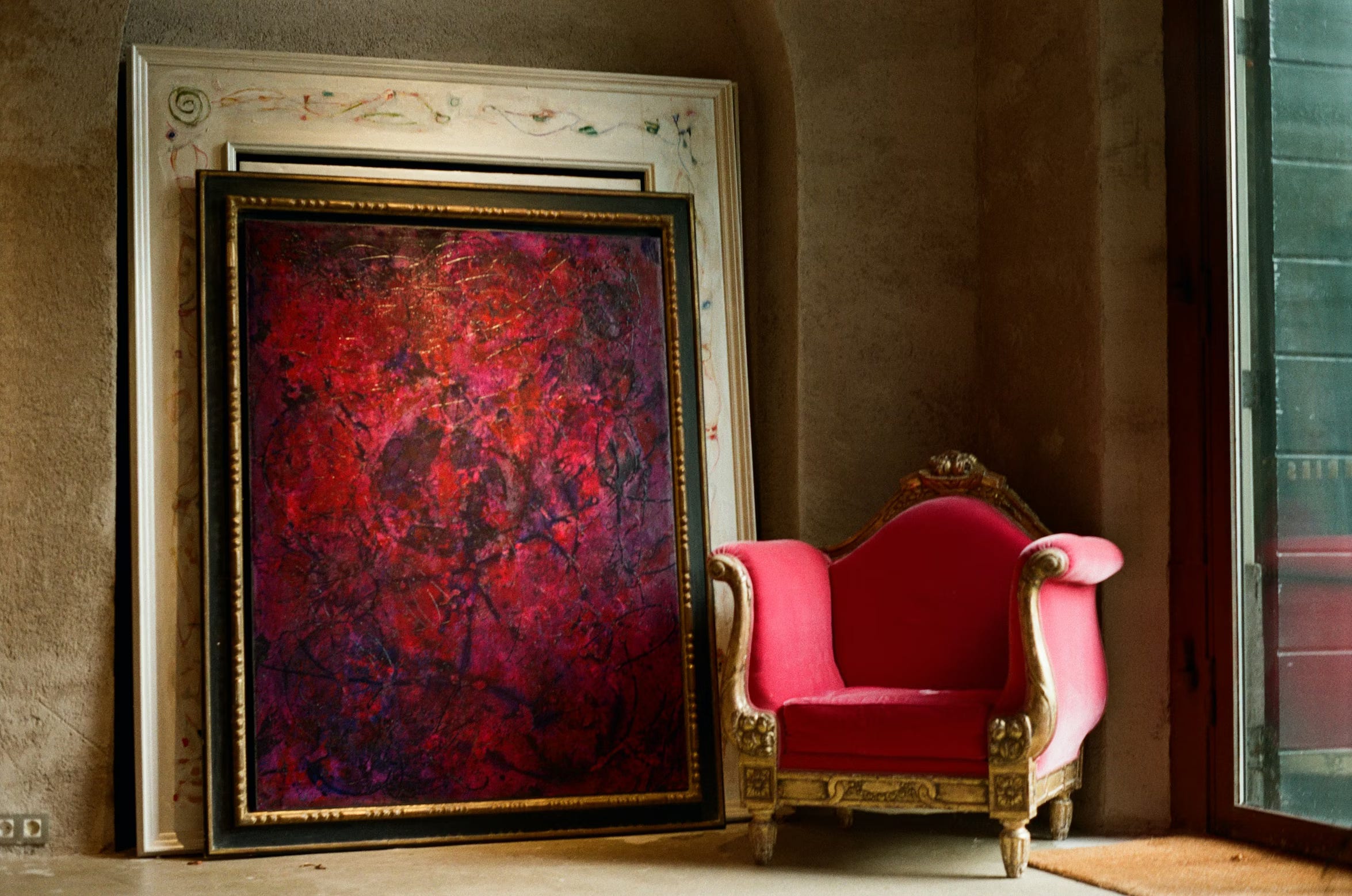
Billionaires hoard art because it is one of the only things that can make their money feel less disgusting. On the surface, it is status, tax games, resale, asset diversification, the usual white-collar necromancy. Underneath, it is spiritual money laundering. A Richter on the wall turns greed into taste, turns possession into sensitivity. It tells you, through brushstrokes and provenance, that the person who grinds workers into dust and moves factories like chess pieces is actually a steward of civilization. Jets and yachts scream what they are. Art does something more useful. It launders greed into the illusion of depth. A yacht says I won. A Rothko says I feel.
And yet the instinct itself is not fake. That is what makes this more complicated than simple hypocrisy. Living with art is different from visiting it. A museum is a public encounter, a pilgrimage, a shared hush between the gift shop and the bathroom. Living with something for years is a relationship. You see it grieving, half-awake, bloated, victorious, wrecked from the news, cleaning cat shit, answering emails, barely thinking at all. The work does not move. You keep molting around it.
I know this because I live with art, or at least with the strange, intimate category of objects that become art because they keep watching you live. I have a fake Rothko above my sideboard that I look at every day and still find beautiful. I have a drawing one of my ex-fiancées made for me, a naked female figure that is also, depending on how you look at it, a wine bottle. I still look at it. I still think of her, not destructively, just as part of the weather of my life. I have a painting I commissioned from the ex-wife of an old friend I later wrote about here, and it remains one of the most incredible things in my apartment. Then there is the more Lyle-coded material: maps of the Grosses Gewächs vineyards in the Pfalz, because I love maps; a fake advertisement for the Overlook Hotel in Sidewinder, Colorado, from Last Exit to Nowhere; a fake Miró; a watercolor nature piece I have had forever; a few other images and objects that would make total sense only to me. I would never trade any of them. Adding something new would not be casual. These things have outlived versions of me.
That is the actual miracle of living with art, and it has nothing to do with price. The object holds its line. The light shifts. You shift. One day the blue in a corner feels like a bruise. A year later it feels like an opening. The work does not care what you are worth. It does not perk up when you enter the room. It does not flatter you back. In a rich person’s life, where every face is on some level an employee, a fixer, a social climber, or a paid compliment, that indifference starts to feel like God.
This is why billionaire collections are so grotesque to me. They are accidentally right about one thing for the worst possible reasons. Living near beauty really does alter consciousness. It steadies something. Sharpens something. Keeps a room from becoming a pure logistics hub for money and devices. A kitchen with one beloved drawing on the wall is a different psychic space from a kitchen with only an Alexa and a pile of Amazon boxes. Beauty is not decoration. It is alignment.
The obscenity is not that rich people love art. It is that they monopolize one of the few luxuries that can actually deepen being alive. They own the land, the view, the waterfront, the coastline, and then they also own the paintings that might have made those spaces bearable for everyone else. Masterpieces sit in freeports and townhouses and climate-controlled bunkers in Geneva while public schools cannot afford a part-time art teacher. Collections become line items, tax shelters, chips in a game that does not include you. Art, which should be one of the ways a society talks to itself across time, becomes another way the ruling class talks to its accountants.
This is the same logic as private healthcare, private schools, private jets, private islands. Anything that might make life richer, softer, more livable gets peeled away from the commons and stacked in the private realm like firewood. In a sane country, we would be talking about taxing the hell out of idle collections, expanding museums, putting great work in libraries and schools instead of storage lockers. In this country, we are trying to keep fascists from banning queer art and jailing librarians. So you work with the terrain you have. You support the museum even when the board is full of ghouls, because the alternative is no museum. You buy from the living artist when you can, because at least that money feeds a human instead of a trust. You treat your own tiny collection, however modest, as something sacred that does not answer to resale value.
I think about this when I look at the walls in my apartment, which is also my office, my bunker, my sleep lab, my little control center for watching the empire come apart in real time. The wine business is collapsing around me in slow motion. Tariffs, pandemics, supply chain chaos, a political class treating small importers like background noise while they court the big distributors. In that context, art is not some dainty flourish. It is a reminder that there was, and still is, another way to measure value besides quarterly earnings and follower counts.
Going to a museum is beautiful. Living with art is different. It works on you slowly, privately, without applause. It is a long conversation with something that does not need you, and that is exactly why you need it. In a country where everything is being turned into content, owned, mined, and flipped, that kind of stubborn, useless presence feels almost revolutionary.
The tragedy is not that billionaires love art. The tragedy is that they have turned even that love into another enclosure, another locked door in a house that already has too many.
Thank you. Helpful, thoughtful insight. Keep on.
Peace, Rick Brown
This is such a beautifully written post.
It made me think of Inigo Philbrick who conned art ‘collectors’ in the London art world. No soul or genuine love for the works, just another thing to invest in.